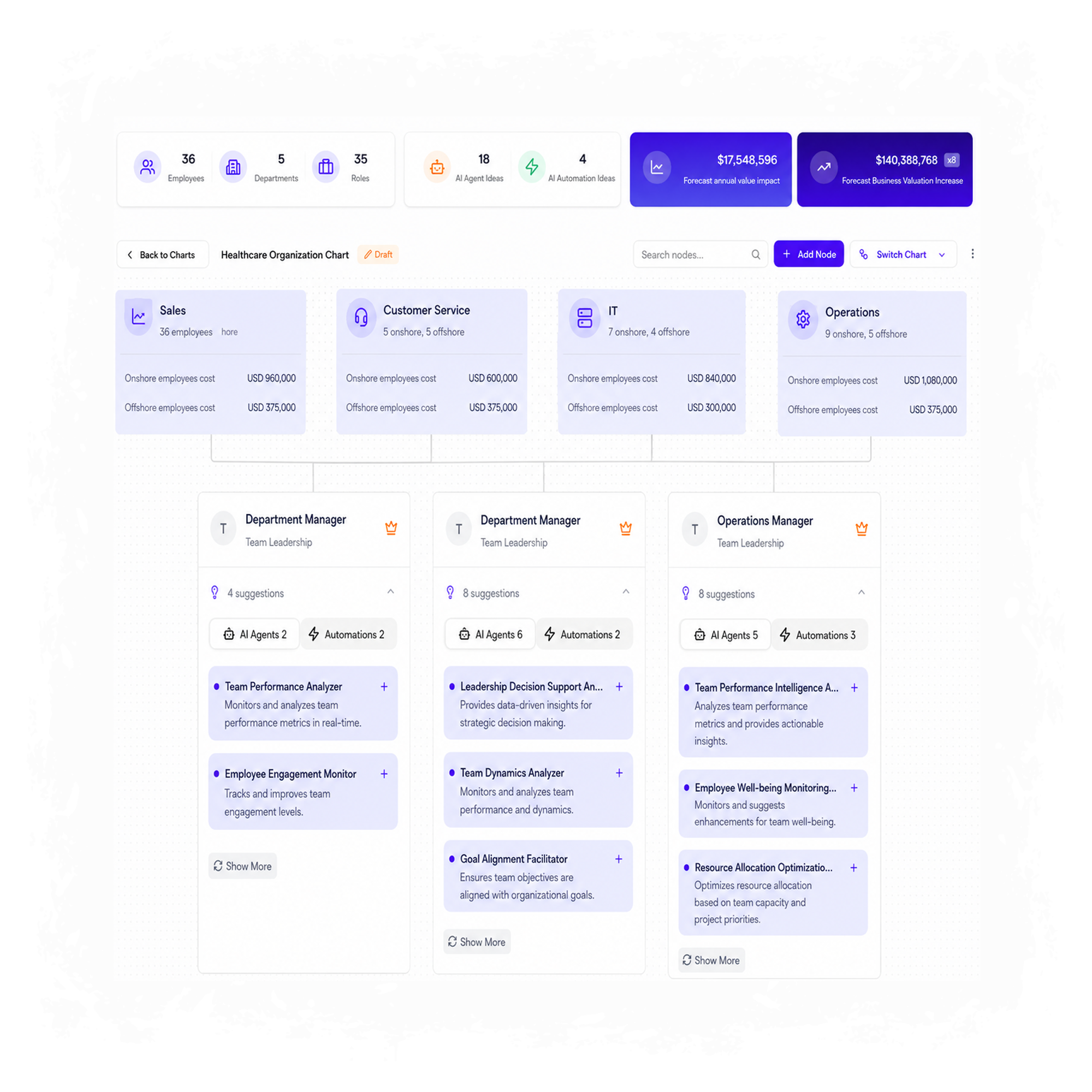
Most organisations have more AI pilots than they have governed AI in production. We close that gap, same control structure, from the first use case to the fiftieth.
Book a Discovery Call DISCOVER HOW WE DELIVER
Pilots are easy to greenlight in a portfolio review. Use cases that connect cleanly to each other, and to the data and decisions that depend on them, are rarer.
The result: a pipeline that looks full and a production environment that doesn’t match it.
AI use cases that aren't connected to each other, and to the data and decisions that drive them, don't build capability. They build technical debt.
Every use case defined, owned, progressed, and traced within the same control structure.
Outputs connect cleanly to the decisions and data that depend on them.
The same control structure holds as the portfolio grows, not just for the first three use cases.
In practice, AssureChange™ connects every use case to the ownership, governance, and traceability structure it needs to be delivered and defended.
When every use case in the portfolio is governed the same way, the portfolio scales without each new addition requiring its own bespoke risk conversation.
Every use case in the portfolio, defined, owned, progressed, and traced within the same control structure. That's what governed AI use case delivery means.
A short, honest conversation about what’s actually ready to scale and what isn’t yet.
An AI Use Case is a specific, defined application of artificial intelligence that solves a real business problem or creates measurable value. Identifying the right use cases is the difference between AI that delivers tangible return on investment and AI that consumes budget without meaningful impact.
The right use cases are determined by your business priorities, your data maturity, your existing technology landscape, and your operational pain points not by what is trending in the market. Bushey IT works with your leadership to identify, validate, and prioritise use cases that are genuinely viable and strategically aligned.
The most successful starting points are typically high-volume, repetitive processes where data already exists and the cost of errors is well understood. Common early use cases include intelligent document processing, predictive maintenance, customer service automation, fraud detection, and demand forecasting but the right starting point is always specific to your organisation.
We apply a structured viability assessment across four dimensions: data availability and quality, technical feasibility, business value potential, and organisational readiness. A use case that scores well across all four is a strong candidate for investment. One that doesn't may need foundational work before it can be pursued effectively.
A quick win delivers visible value rapidly typically within weeks building organisational confidence in AI and generating momentum. A strategic use case delivers transformational impact over a longer horizon, often requiring more foundational investment. A balanced AI programme needs both, sequenced deliberately.
Attempting too many use cases simultaneously is one of the most common reasons AI programmes stall. We typically recommend starting with two to three well-scoped use cases that can be delivered to production standard demonstrating real value before scaling the programme further.
Data is the foundation of every AI Use Case. The quality, volume, accessibility, and lineage of your data directly determine what is possible. As part of our use case identification process, we assess your data estate and identify where data gaps need to be addressed before a use case can be successfully deployed.
Absolutely. AI Use Cases span both internal operations process automation, decision support, predictive analytics and customer-facing applications such as personalisation, intelligent self-service, and real-time recommendation engines. The right balance depends on where the greatest value lies within your specific business model.
We define success metrics at the outset of every use case before development begins. These are tied directly to business outcomes: cost reduction, time saved, error rates, revenue impact, or customer satisfaction improvement. Post-deployment, we monitor performance against these metrics and adjust where needed.
Yes, and this is one of the most common conversations we have. Book a Discovery Call with one of our co-founders and bring your ideas. We will help you structure them, assess their viability, and build a prioritised roadmap that turns internal ambition into a credible, deliverable AI programme.
AssureChange™ is Bushey’s delivery and governance control framework used to manage and deliver transformation with clarity, control, and accountability from start to finish.
Unlike traditional frameworks that guide activity, AssureChange™ provides structured control over decisions, risk, and accountability ensuring outcomes hold under real operating conditions. https://busheyit.sharepoint.com/sites/allstaff/_layouts/15/Doc.aspx?sourcedoc={614ED20D-2CA3-4A61-B506-56C20CC54FA6}&file=Assurechange website feedback 20260511.docx&action=default&mobileredirect=true&DefaultItemOpen=1
No. AssureChange™ is not a methodology, toolkit, or standalone service. It is the governance and delivery framework that underpins every Bushey engagement.
AssureChange™ is applied across all transformation contexts including: Technology transformation programmes Data Centre and infrastructure change AI and cyber initiatives M&A technology integration engagements
It introduces: Stage-gated decision control Evidence-based progression Clear accountability ownership Continuous governance visibility This ensures projects move forward with control, rather than assumption.
AssureChange™ governs three core areas: Decisions – made with evidence and clear authority Risk – identified early and actively managed Accountability – defined and owned throughout delivery
No. AssureChange™ is applied consistently across all engagements, ensuring the same standard of governance and control regardless of project type or complexity.
It provides: Clear decision checkpoints Transparent reporting Evidence-based assurance Full visibility of risks and progress This allows leaders to stand confidently behind delivery outcomes.
No. It works across all delivery parties, providing a consistent governance model regardless of who is executing the work.
Organisations can expect: Controlled scope and execution Predictable, measurable outcomes Strong governance and accountability Stable transition into operations This enables transformation to be delivered with certainty, not risk.