
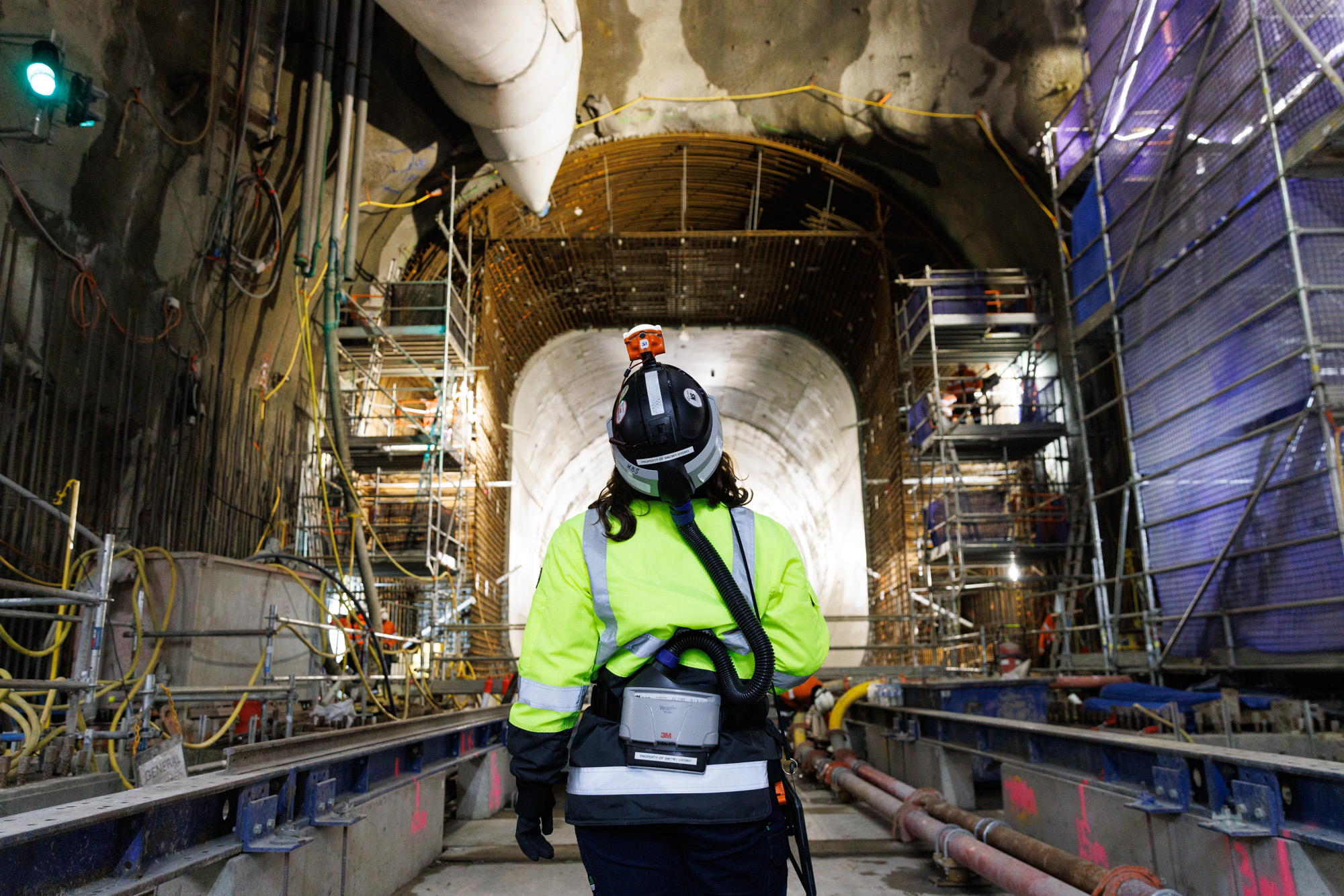
Last Thursday (22nd October 2026) night, Snowy Hydro released its long-awaited cost reassessment of Snowy 2.0. The new target cost is $22.2 billion, with an allowance for the project to reach $25 billion. Full commissioning has slipped again to late 2029.
When Snowy 2.0 was announced in 2017, the price tag was $2 billion and first power was promised for 2021. The project will now cost up to twelve times that figure and arrive eight years late.
I have spent most of my career inside large programmes, some of them recovering from exactly this kind of moment. So rather than add to the political noise, I want to look at what Snowy 2.0 tells every sponsor of a major Transformation Programme, whether you are building a power station a kilometre underground or replacing a core server platform.
How a number becomes a promise
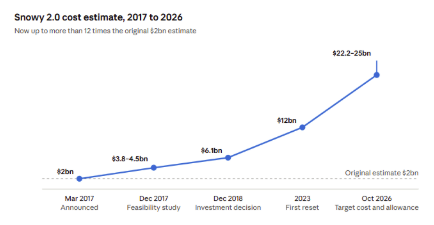
Every one of these figures was presented, at the time, as the realistic number. Each became the new baseline, and each was overtaken by the next.
What actually went wrong
Snowy Hydro’s own explanation is refreshingly candid. It names ‘design immaturity’, the inherent complexity of tunnelling through the Snowy Mountains, contractor productivity that fell well short of targets, and cost escalation that blew through the allowances set at the 2023 reset.
Read that list again and notice how little of it is about rock. Design immaturity means the project committed to a price before it understood what it was building. Missed productivity targets mean the plan assumed a pace of work nobody had proven. Escalation beyond allowances means the contingency was a number chosen to make the business case work, not a number drawn from the risks.
There is a contract story too. The original fixed-price deal looked like it moved risk to the contractor. In practice it produced billions of dollars in claims, and Snowy Hydro has now moved away from a fixed price so it can manage costs directly. Its chief executive has also had the contractor stand up a project control office with better data and analytics, so emerging risks surface early. That is the right move. It is also something that belonged on day one, not year seven.
Three lessons for every sponsor
The first lesson is that the announcement number becomes the baseline, whether it deserves to or not. Snowy 2.0’s $2 billion arrived without a business case behind it, and every revision since has been measured against it. I see the same thing in IT programmes all the time. A figure gets floated in a board paper to secure interest, and two years later it is the yardstick for failure. If the design is immature, say so, and give a range rather than a point.
The second lesson is that contracts do not transfer risk, they reshape it. A fixed price on an immature design is not certainty. It is a claims schedule waiting to happen. Whoever owns the outcome still owns the risk, and that is almost always the client.
The third lesson is that cost control is a capability, not a report. A programme needs live insight into productivity, scope and contingency burn from the first month. By the time a reset is needed, the information that would have prevented it has usually been sitting in someone’s spreadsheet for a year.
Snowy 2.0 is not alone. Deloitte found earlier this year that 13 publicly funded road, rail and energy projects had run $130 billion over their first estimates. The pattern is not unlucky geology. It is how large programmes are set up.
Where AssureChange® comes in
At Bushey, AssureChange® is the framework at the core of every Transformation Programme we deliver. It brings Project Management, Change Management and Governance together in one way of working, aimed at one thing – the business benefits the organisation signed up for.
Applied to a programme like Snowy 2.0, it asks awkward questions early. Is the design mature enough to support a committed cost, or should the board see a range? Who owns each risk the contract claims to transfer, by name? What productivity is the plan assuming, and where is the evidence it has been achieved before? How much contingency has been used, and what was it spent on?
None of this is glamorous. But independent, client-side assurance is precisely what keeps a $2 billion idea from quietly becoming a $25 billion problem. We do not sit on the contractor’s side of the table, and we are not there to write reports nobody reads. We are there to make sure the sponsor hears the real position while there is still time to act on it.
Questions worth asking this week
Snowy 2.0 will probably be worth having when it is finished. Its long-duration storage matters for a grid moving to wind and solar. But value delivered late and at twelve times the price is a lesson nobody should need to learn twice.
If you are sponsoring a major programme right now, put four questions to your team.
Is our cost a point or a range, and how mature was the design when we set it?
Which risks have we really transferred, and which have we only renamed?
What productivity is our plan assuming?
When did someone last tell the board something it did not want to hear?
If any of those make you pause, I would be glad to talk it through. Get in touch with me or the team at Bushey, and we will help you find out where your programme really stands.
Summary
Snowy 2.0 has grown from a $2 billion announcement in 2017 to a target cost of $22.2 billion, with an allowance of up to $25 billion. Snowy Hydro puts this down to design immaturity, missed productivity targets and a fixed-price contract that moved risk around rather than removing it.
For any sponsor of a major Transformation Programme, the lesson is to treat early estimates as ranges, own the risks you think you have transferred, and build real cost control from day one.
About Bushey Technology Transformation
Bushey is a specialist boutique consultancy, with reach across Australia and APAC. Our Technology Transformation Practice provides independent, client-side delivery and advisory for Corporate and Government organisations. We take complex programmes through to benefits, not just to plan.
Our team has led senior technology functions and delivered high-profile programmes across finance, insurance, manufacturing, retail and the public sector. We have also recovered troubled programmes, including an APAC-wide Programme completed over 18 months alongside a global delivery partner.
At the core of every engagement is AssureChange®, our proprietary framework bringing Project Management, Change Management and Governance together around one goal, the business benefits you signed up for. We sit on your side of the table, so you always hear the real position while there is still time to act.
Comments are closed